

Autonomous Life Science
Inside Ginkgo's autonomous lab with CEO Jason Kelly

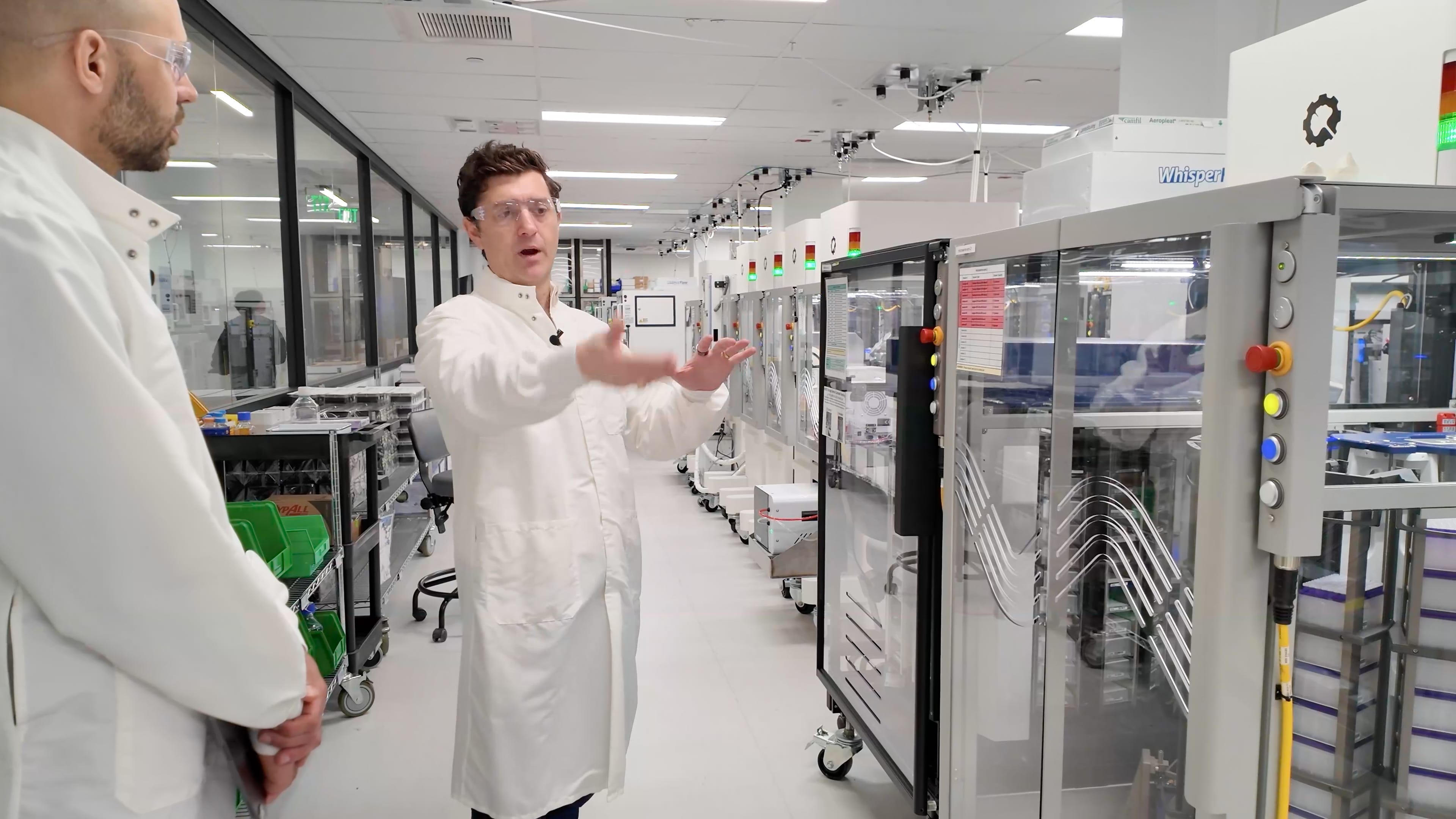
I recently toured Ginkgo Bioworks’ HQ in Boston’s Seaport District and sat down with CEO Jason Kelly for a deep-dive interview. Ginkgo is placing a big bet on the future of life science being autonomous. Here’s why I think it’s an area worth paying attention to.
Distilling Drug Discovery
Taking a step back, what does it actually take to develop a cure for a disease? In my research, it boils down to three moves: Identify the disease you wish to treat. Develop an informed hypothesis about the mechanisms by which it unfolds in the human body – an extraordinarily complex, not-yet-fully-understood system of over 30 trillion cells. Then develop and manufacture a therapy that influences those mechanisms to alleviate symptoms, with minimal side effects.
In the US, this process famously costs – on average – over $2.5 billion and takes a decade or longer. So, how do we make it cheaper and faster?
One approach: enable the entire system to run more efficiently. Tedious note-taking? Electronic lab notebooks let researchers go digital-first. Repetitive pipetting? Automated liquid handlers help lighten the load. High labor costs? Contract Research Organizations offer economies of scale and, when offshored, cheaper wages.
Globally, policy innovation is also an important lever for efficiency: for example, in the US, clinical trials require a high (and expensive) burden of proof to be greenlit by the FDA, standing in contrast to countries such as Australia and China, where an “implicit approval” system approves trials automatically unless a safety concern triggers intervention.

Better fundamental research also helps. More accurate models of disease and human biology mean more informed hypotheses, more shots on goal, and thus more effective use of every research dollar. Long-term initiatives like the Human Genome Project have spawned new categories of treatment, such as promising gene therapies.
And yet, cost and timelines have remained stubbornly high. The industry even has a name for it: Eroom’s Law – Moore’s Law spelled backwards – which holds that “the inflation-adjusted cost of developing a new drug roughly doubles every nine years.” Meanwhile, large pharma companies are increasingly turning to China to license sophisticated new drugs that were once the hallmark of American innovation.
The Case for Autonomous Life Science
What if we gave AI access to a wet lab?
At a basic level, an embodied AI system could surface new efficiencies in how science is done – optimizing expensive reagent use, running experiments in parallel, reducing equipment idle time. More ambitiously, automation could bring back contract research work that’s been offshored, recapturing lost margin and, perhaps more importantly, protecting sensitive IP from leakage.
Looking further ahead: with enough experience interfacing with real-world biology, could AI models develop better-informed hypotheses about how diseases unfold – and which therapies to test? Could these systems extend beyond the lab to advise on patient recruitment, trial design, and even full R&D strategy to further reduce the cost and time it takes to bring new drugs to market?
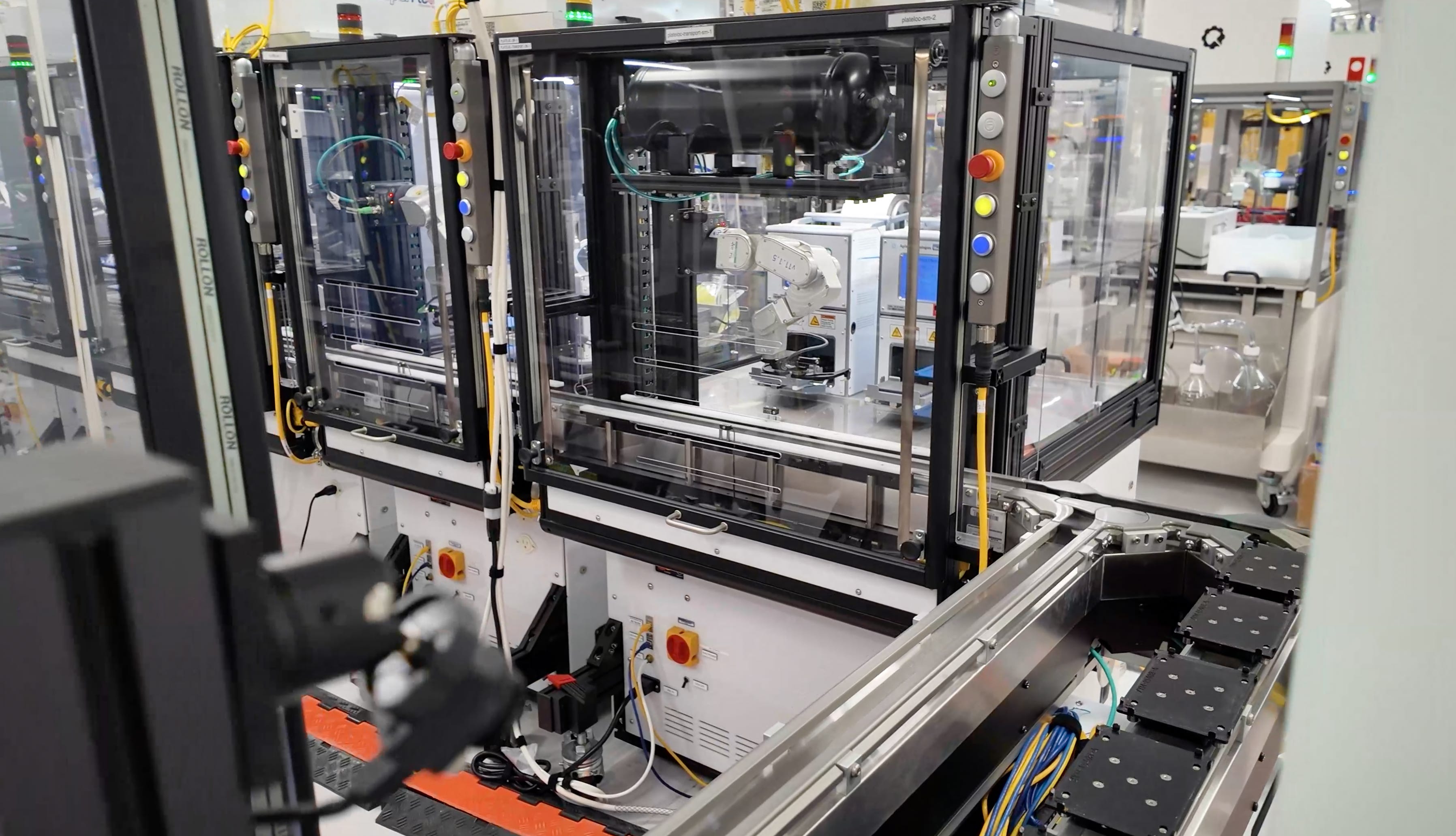
This vision sits at the heart of Ginkgo Bioworks, one of a number of companies leaning hard into autonomous science. Ginkgo has seen its share of ups and downs since going public in 2021, but the company has recently notched two meaningful wins. First, a $47 million contract to augment the capabilities of the DOE’s Pacific Northwest National Lab’s Microbial Molecular Phenotyping Capability (M2PC), focused in part on generating rich microbial datasets. Second, a recent partnership with OpenAI, where they collaborated on leveraging GPT‑5 to lower the cost of cell-free protein synthesis, claiming a 40% reduction in protein production cost.
What follows is my conversation with Jason on his vision for autonomous life science, the challenges of realizing it (both scientific and economic), and the geopolitical forces driving AI-for-science investment.
If you’re curious about where frontier AI meets the lab bench, check out the latest episode of the Discovery Engines Podcast.
Watch or Listen Now
Also available on:
Spotify:
Apple Podcasts:
Show Notes
Episode Links:
OpenAI x Ginkgo cell-free protein synthesis collaboration: https://openai.com/index/gpt-5-lowers-protein-synthesis-cost/
Genesis Mission to Accelerate AI for Scientific Discovery: https://www.whitehouse.gov/fact-sheets/2025/11/fact-sheet-president-donald-j-trump-unveils-the-genesis-missionto-accelerate-ai-for-scientific-discovery/
PNNL’s Anaerobic Microbial Phenotyping Platform (AMP2): https://www.emsl.pnnl.gov/science/instruments-resources/anaerobic-microbial-phenotyping-platform-amp2
Ginkgo’s win for PNNL’s Microbial Molecular Phenotyping Capability (M2PC): https://www.prnewswire.com/news-releases/ginkgo-bioworks-selected-by-pnnl-to-deliver-a-modular-highthroughput-phenotyping-platform-for-does-m2pc-302634071.html
Society for Lab Automation and Screening: https://www.slas.org/
Globaldata Report on Large pharma drug licensing from China: https://www.globaldata.com/media/business-fundamentals/large-pharma-drug-licensing-from-china-reaches-record-high-at-28-in-2024-reveals-globaldata/
Ginkgo Bioworks: https://www.ginkgo.bio/
Jason Kelly: https://www.linkedin.com/in/jrkelly2/
Episode Chapters:
01:54 - Jurassic Park and the Value of Storytelling in Science
04:50 - What Is the Department of Energy's AMP2 at PNNL?
07:17 - How Autonomous Labs Can Be Used to Run Experiments
11:49 - Principles of the Autonomous Lab (Waymo Analogy)
17:12 - Project Genesis, Competing with China in Scientific Discovery
23:42 - Reindustrializing America via Automation
25:52 - Challenges to Achieving the Autonomous Lab
37:03 - OpenAI Designing and Running Bio Experiments
47:17 - Advice to Frontier Labs Designing AI Intelligence for Science
49:24 - Ginkgo Autonomous Lab Tour
1:00:38 - OpenAI's Interface With Ginkgo
1:02:51 - Lab Scheduler Platform
1:16:19 - Advice for Deep Tech Startups
1:22:22 - Advice for Scientists, Founders Thinking About Where to Focus in Biotech
1:25:18 - How Research Labs Could Better Collaborate and Communicate Results
1:26:35 - The Pharma Industry Takes Exploratory Risks
1:29:23 - Advantages and Challenges of Going Public
1:32:14 - Public Perception of Ginkgo
1:33:57 - How Ginkgo's Business Model Has Changed